Market structure and risk reality
Trading Solana memecoins is not casual speculation; it is a specialized infrastructure challenge. The "degen" role requires the same technical precision as high-frequency trading, just with different assets. You are operating in a market defined by extreme volatility and asymmetric information, where seconds matter and liquidity can vanish instantly.
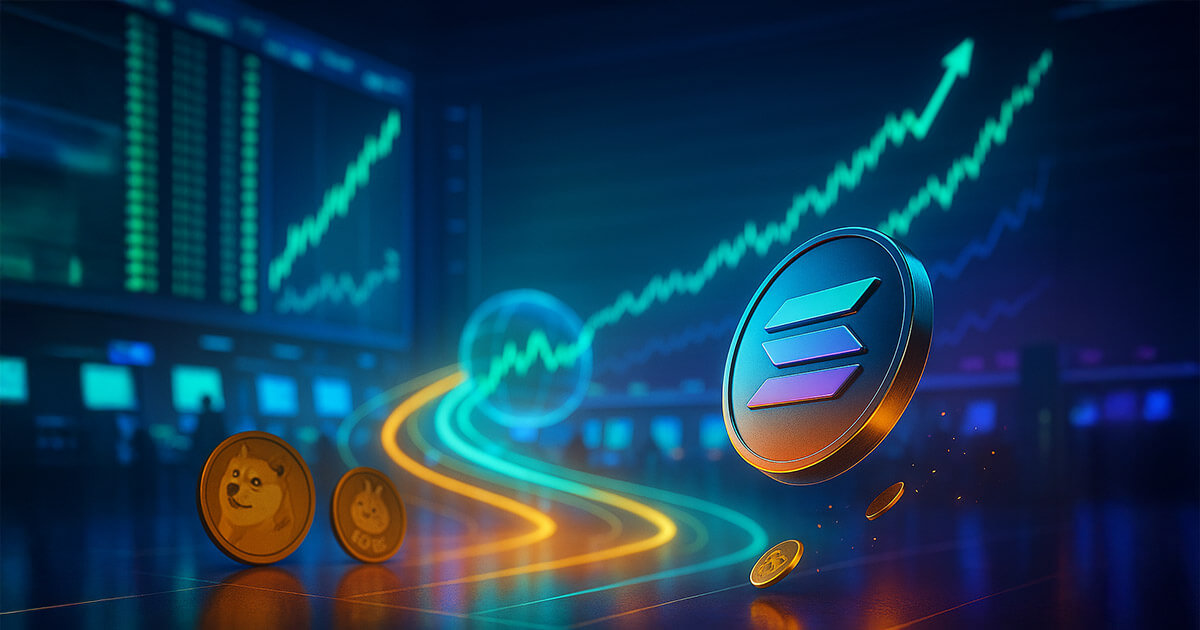
The baseline for this activity is Solana itself. Understanding the native token's behavior is the first step.
Before you attempt to capture alpha, you need the right tools. Casual browsing won't cut it. You need real-time data from platforms like Birdeye or DexScreener to track token launches and liquidity depth. Your wallet must be configured for speed and low fees, typically Solflare or Phantom, to execute swaps before the block confirms. Without this infrastructure, you are not trading; you are gambling with the house always winning.
Why Standard DEXs Fail at Speed
Trading Solana memecoins on standard decentralized exchanges like Raydium or Jupiter is often a losing strategy for short-term alpha. While these platforms are excellent for stablecoin swaps or large-cap assets, they lack the execution speed required for high-volatility meme trading. By the time a manual transaction confirms on-chain, the price has often already spiked or crashed.
Community consensus on platforms like Reddit highlights this friction: users frequently report getting "rekt" when relying on native DEX interfaces for new launches. The delay in manual approval and standard slippage settings means you are competing against bots that execute in milliseconds. To trade effectively, you need infrastructure that automates the workflow.
Trading bots solve this by connecting directly to Solana RPC nodes, bypassing the graphical interface delays of standard DEXs. They allow for instant buy/sell actions, custom slippage tolerance, and anti-rug features. For the "degen" trader, these tools are not optional luxuries; they are the necessary engine for survival in the memecoin market.
| Bot | Speed | Fees | Security |
|---|---|---|---|
| Trojan | Instant | 0.5-1% | Anti-rug, Limit Orders |
| BonkBot | Instant | 0.1% | Basic Snipe |
| Photon | Near-Instant | 0.5% | Real-time Charts |
The table above compares the three most prominent execution tools. Trojan is favored for its advanced feature set including anti-rug protection, while BonkBot is popular for its low fees and simplicity. Photon offers a web-based terminal that bridges the gap between a DEX interface and a bot terminal.
Tracking liquidity and wallet movements
You can’t trade what you can’t see. On Solana, the alpha lives in the data stream, not the hype. Your research stack needs real-time visibility into liquidity pools, swap volumes, and the movement of smart money. Without this infrastructure, you’re just gambling with blindfolded eyes.
Birdeye and DexScreener are the standard for on-chain discovery. Birdeye offers deep liquidity tracking and token launch data, while DexScreener provides a faster, cleaner interface for monitoring live charts and swap activity. These platforms aggregate raw blockchain data into readable formats, allowing you to spot volume spikes and liquidity additions before they hit mainstream social feeds. Phantom’s starter guide outlines how these tools integrate with your wallet for secure interaction.
Tracking wallet movements is the next layer. You’re looking for "smart money"—wallets with a history of successful early entries. Tools like Degenomics help map these movements, showing you which addresses are buying before the price pumps. This isn’t about following influencers; it’s about following capital. If a wallet with a 70% win rate buys a new token, that’s a signal. If it sells immediately, that’s a warning.
PriceWidget for WIF
The market moves in milliseconds. A price widget for a high-volume asset like Dogwifhat (WIF) shows you the reality of volatility. You need to see the live order flow, not a delayed snapshot. This real-time data is your only defense against rug pulls and sudden dumps. Stay sharp, track the data, and let the numbers guide your entries.
Security protocols and wallet setup
Trading Solana memecoins is high-stakes infrastructure work, not gambling. The difference between a lucky trade and a sustainable career is your setup. Before you connect a wallet to any new interface, you need to isolate your assets and configure your transaction environment. This section covers the concrete steps to secure your wallet and prevent smart contract exploits.
1. Use a dedicated "burner" wallet
Never use your primary savings wallet for memecoin trading. Create a fresh Solflare or Phantom wallet specifically for this activity. Fund it only with the amount you are willing to lose. If a malicious contract drains your funds, your main portfolio remains untouched. This isolation is the single most effective security measure you can take.
2. Enable transaction simulation and limits
Most modern Solana wallets allow you to simulate transactions before signing. Always enable this feature. It shows you exactly what a contract will do—whether it’s swapping tokens or approving unlimited access to your holdings. Additionally, set a low transaction limit (e.g., 0.1 SOL) for unknown contracts. This prevents accidental large losses from typos or malicious prompts.
3. Revoke token approvals regularly
When you swap or provide liquidity, you often grant smart contracts permission to spend your tokens. Over time, these approvals accumulate and create security risks. Use a tool like SolanaFM or Revoke.cash to review and revoke any unused approvals. This step ensures that even if a previously safe contract is compromised later, it cannot drain your assets.
4. Verify contract addresses on-chain
Phishing sites often mimic legitimate trading interfaces. Always verify the contract address of a memecoin on-chain explorers like Solscan or DexScreener before swapping. Check the token’s liquidity pool and holder distribution. If the contract is unverified or liquidity is locked for a short period, treat it as a high-risk asset and reduce your position size accordingly.
Create a new Solflare or Phantom wallet. Fund it with a small, fixed amount of SOL. Never use this wallet for long-term storage or primary DeFi activities.
Enable simulation in your wallet settings. Set a maximum transaction size for unknown contracts to cap potential losses from malicious prompts.
Cross-reference token addresses on Solscan or DexScreener. Check for verified contracts and locked liquidity before swapping.
Use Revoke.cash to scan and revoke permissions for contracts you no longer use. This prevents dormant approvals from being exploited later.
Hardware for Secure Storage
Hot wallets like Phantom and Solflare are essential for active trading, but they are not vaults. When you move significant gains off the screen and into long-term holding, you need a device that never connects to the internet. This hardware layer is the final barrier against remote exploits.
A hardware wallet keeps your private keys inside a secure chip. The device signs transactions locally, so your keys never touch a potentially compromised computer or phone. For Solana degens, this means selecting a device with verified Solana support to avoid interface errors that could send funds to the wrong address.
The Ledger Nano X and Trezor Safe 3 are the standard references for this stack. Both support Solana natively via their respective desktop managers. They offer physical button confirmation, which forces you to verify the exact destination address and amount on the device screen before any transfer occurs.


As an Amazon Associate, we may earn from qualifying purchases.
Keep your seed phrase on paper or metal, never in a screenshot or cloud note. If your hardware wallet is lost or damaged, that seed phrase is the only way to recover your assets. Treat it like the master key to your financial identity.
Common questions about Solana trading
Could Solana hit $10,000?
A $10,000 SOL price is highly unlikely given current market dynamics and token supply. While Solana’s infrastructure remains robust for high-frequency trading, such a valuation would require an unprecedented shift in global capital allocation. For now, it’s best to treat Solana as a high-performance layer for trading rather than a store of value for long-term price appreciation to that degree.
What is a Solana Degen?
In the Solana ecosystem, "degen" refers to traders who prioritize speed and on-chain alpha over traditional fundamental analysis. This isn’t just slang; it describes a specific technical role requiring tools like BullX or Photon for low-latency execution. These traders often engage with new launches, liquidity pools, and NFT integrations, leveraging the network’s sub-second finality to move capital faster than traditional finance allows.
How much Solana is needed to launch a meme coin?
Creating and launching a meme coin typically costs less than $1 in network fees. However, this only covers the token creation. To make the token tradable, you must provide initial liquidity, which requires additional SOL. No-code platforms like Pump.fun allow for rapid deployment, but you’ll need extra capital in your wallet to seed the pool and attract early buyers.
How to find good meme coins on Solana?
Discovery relies on real-time data rather than curated lists. Use Birdeye to track new token launches and monitor liquidity depth, or DexScreener for live charting and transaction history. Additionally, Crypto Twitter remains the primary source for spotting trends early, though the noise is significant. Cross-referencing these tools helps filter signal from the chaos.
No comments yet. Be the first to share your thoughts!